
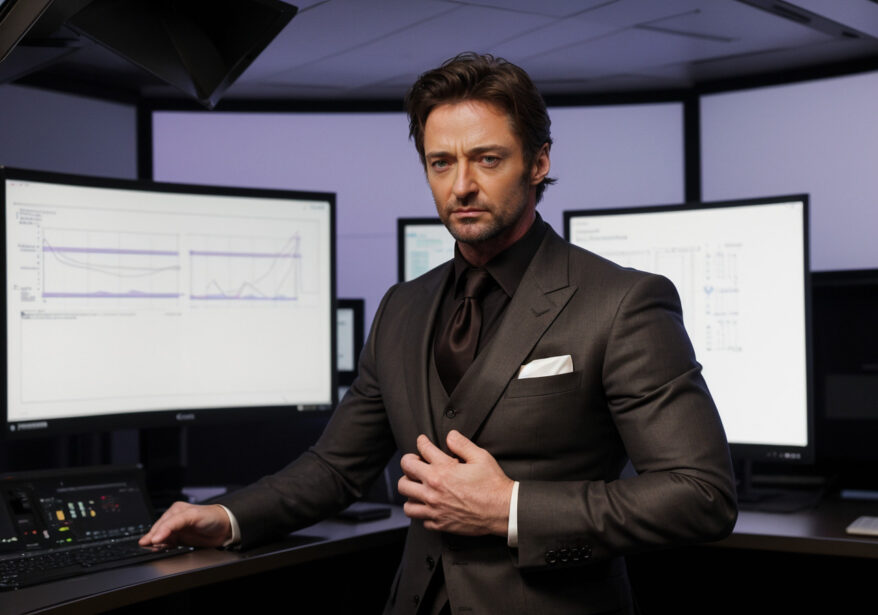
Every few weeks, someone declares that AI-generated images and videos are ruining social media.
Apparently the internet was a pure paradise until people started generating images with prompts.
That’s a comforting myth — but it’s completely wrong.
Social media didn’t collapse because of AI.
It collapsed the moment platforms like Instagram decided to become TikTok.
That was the real turning point.
The day they replaced chronological feeds with algorithmic spoon-feeding, the user stopped being the customer and became something else entirely:
Livestock.
A passive consumer in what I have previously called the soyboy farm — endlessly scrolling through whatever the algorithm decided to push into your brain.
The Moment the Resistance Failed
When Instagram began its transformation, a small minority of people resisted.
A few alpha males did what real men always do when a system becomes hostile:
They adapted or exited.
Some sideloaded older Instagram versions to keep chronological feeds.
Others simply stopped using the platform entirely.
But the overwhelming majority?
They submitted.
They accepted the algorithmic feed.
They scrolled endlessly.
They surrendered their attention to a machine designed to maximize engagement rather than value.
By that point, AI barely existed in the form people fear today.
OpenAI had early text models that only tech enthusiasts were experimenting with.
AI image generation was limited to style transfer experiments.
We hadn’t even seen the first crude steps of tools like Craiyon.
In other words:
The downfall of social media happened long before generative AI arrived.
Fast Forward to the AI Era
Today, the situation looks very different.
AI has exploded in capability.
You can generate realistic images, animations, or even short cinematic videos from a single photograph and a text prompt. What once required entire production teams can now be done by a single creator in minutes.
Naturally, people complain about “AI slop.”
Their feeds are suddenly filled with bizarre images, strange videos, and content that makes them pause and ask:
What the hell is this?
But here’s the irony.
This chaos might actually save social media.
The Algorithm’s Fatal Weakness
Once generative AI entered the scene, the weakness of algorithmic feeds became impossible to ignore.
The algorithm doesn’t care about authenticity.
It doesn’t care about human creativity.
It doesn’t care about whether the content is meaningful.
It only cares about engagement signals.
If a bizarre AI video makes people stop scrolling for two seconds, the algorithm pushes it harder.
If a strange AI image makes someone comment “WTF,” the system rewards it.
And suddenly the feed fills with more of it.
People now complain that social media is drowning in AI content.
But the real problem isn’t AI.
The real problem is that algorithmic feeds are fundamentally stupid.
Why AI Detection Won’t Save the Platforms
Some people believe the solution will be AI detection filters.
That’s wishful thinking.
Detection systems can only identify artifacts associated with current image models.
As models improve — and as creators combine multiple tools in complex workflows — those artifacts disappear.
Tomorrow’s generative systems will produce content indistinguishable from traditional media.
And once that happens, detection becomes a losing battle.
The platforms will never reliably filter AI content.
Which leaves only one realistic solution.
The Only Feed That Ever Worked
The original social media model worked for a reason.
You followed people.
You followed hashtags.
Your feed showed exactly those things, in chronological order.
No algorithmic manipulation.
No engagement farming.
No digital cattle herding.
If you didn’t like someone’s content, you unfollowed them.
Problem solved.
In a world full of generative AI, that system becomes even more important.
Because the only reliable way to avoid content you dislike is choosing who you follow.
The Wake-Up Call
So here’s the controversial part.
Instead of blaming generative AI, creators should lean into it.
Use it.
Post it.
Experiment with it.
And yes — occasionally post something strange enough that people stop and think:
“What the hell just appeared in my feed?”
Because every one of those moments exposes the flaw in the system.
Every “WTF” reaction pushes people toward the realization that algorithmic feeds were always a terrible idea.
And once enough users realize that, the pressure for a return to chronological feeds becomes impossible to ignore.
A Call to Action
If you’re a creator, consider this your assignment.
Post your daily controversial AI video.
Generate something strange.
Generate something bold.
Generate something that makes people pause.
Not because chaos is the goal.
But because wake-up calls matter.
The NPCs scrolling endlessly through algorithmic feeds need to see something that breaks the illusion.
Something that forces them to ask why their feed looks the way it does.
Because once they start asking that question, the algorithm’s spell begins to break.
And that’s when social media might finally start becoming social again.